Key Takeaways:
- Hydroplaning happens when tires encounter more water than they can displace, causing a loss of steering and braking control, often starting above 35 mph.
- Risk peaks during the first 10-15 minutes of a rainstorm, before oil and debris wash away, and again during Northeast storm season (June-November).
- Overcorrecting is a common instinct that often makes hydroplaning worse, the correct response is to ease off the gas and steer straight.
- Insurers often try to blame the driver entirely in weather-related crashes, without considering road design, maintenance, or other drivers’ actions.
- Rose Harper Law investigates the full picture behind hydroplaning crashes across NY, NJ, and PA, rather than accepting an insurer’s first explanation.
Understanding when hydroplaning occurs can help you avoid one of the most dangerous conditions a driver faces on a wet highway. Hydroplaning happens when your tires encounter more water than they can push out of the way. A thin layer of water builds up beneath the tire, lifting it off the pavement, and once that happens, you lose control of both steering and braking. It often starts at speeds over 35 mph during heavy rain or on standing wet roads. If a hydroplaning crash has left you injured, a Yonkers car accident lawyer at Rose Harper Law can help you understand your options. Our office is located in Westchester County, and we’re proud to serve Hispanic drivers and families throughout the region, with a fully bilingual team in English and Spanish.
Contact a Yonkers Personal Injury Lawyer
Heavy rain turns busy interstates like I-78, I-80, and the New Jersey Turnpike into genuinely hazardous roadways, and hydroplaning-related crashes spike every year once storm season arrives. This guide breaks down exactly why that happens, when the risk is highest, and what to do if you’re involved in a wet road accident.
Hydroplaning explained: what it is and why it is so dangerous
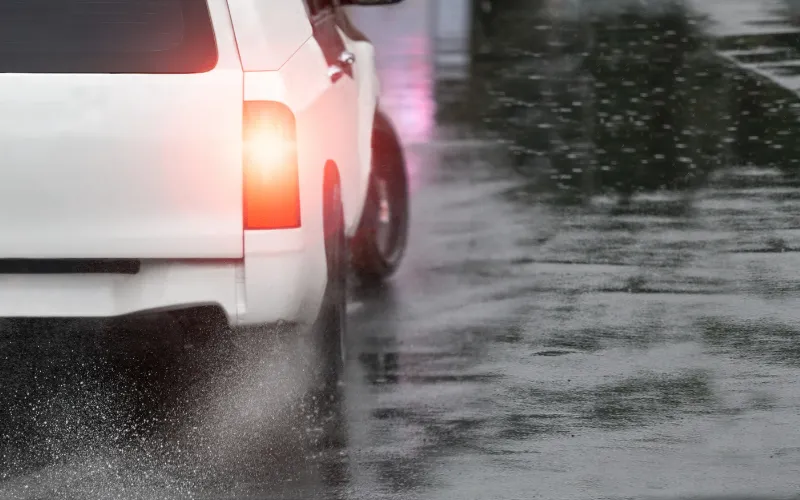
Hydroplaning occurs when water builds up faster than your tire treads can channel it away, creating a thin cushion between the rubber and the road surface. Once that cushion forms, your tires are essentially floating rather than gripping, which means steering inputs and braking pressure stop translating into actual control over the vehicle.
This makes hydroplaning especially dangerous because it often happens without warning. A driver may be traveling at a normal highway speed one moment and suddenly find the car sliding or drifting with no response from the steering wheel the next. Overcorrecting in this moment, a common instinct, frequently makes the situation worse and can send a vehicle into a spin or off the roadway entirely.
When does hydroplaning happen?
Hydroplaning risk climbs sharply during the first ten to fifteen minutes of a rainstorm, before accumulated oil and debris on the road surface get washed away. Standing water, ruts, and low spots in the pavement create pockets where hydroplaning becomes far more likely, even at moderate speeds.
The risk is highest during the region’s seasonal peak Northeast storm season, generally running from June through September, when humid summer thunderstorms bring intense, fast-moving downpours, followed by an uptick in nor’easters between September and November that can produce sustained heavy rain over many hours. Drivers should treat any sudden downpour during these months as a real hydroplaning risk, regardless of how familiar the road feels.
What makes I-78, I-80, and the NJ Turnpike so dangerous during heavy rain
These highways carry extremely high volumes of traffic at consistently high speeds, which is exactly the combination that makes hydroplaning most dangerous. On I-78 and I-80, sections with worn asphalt, minimal shoulder drainage, or aging pavement tend to hold standing water longer after a storm, increasing risk well past the initial downpour.
The New Jersey Turnpike adds another layer of danger: heavy truck traffic. Large commercial trucks displace enormous amounts of water as they travel, throwing spray onto nearby vehicles and reducing visibility for everyone around them. A hydroplaning event involving a passenger vehicle near a tractor-trailer carries a much higher risk of a serious multi-vehicle crash than the same event on a quieter road.
How to reduce your risk of hydroplaning on wet roads?
Simple driving adjustments during heavy rain meaningfully reduce the odds of losing control. The chart below outlines the most effective precautions.
| Precaution | Why it helps |
|---|---|
| Slow down well below the posted limit | Reduces the water pressure building under your tires |
| Avoid cruise control in rain | Lets you react instantly if the car begins to slip |
| Increase following distance | Gives you more time to react to a vehicle ahead losing control |
| Avoid sudden braking or steering | Prevents overcorrection if hydroplaning begins |
| Check tire tread regularly | Worn treads can’t channel water effectively |
| Avoid standing water and puddles when safe to do so | Reduces direct exposure to the deepest water on the road |
| Turn off cruise control on highways during storms | Keeps your foot naturally ready to ease off the gas |
If your car does begin to hydroplane, ease off the accelerator gradually and steer straight until the tires regain contact with the road. Sudden braking or sharp steering can cause the vehicle to spin.
How fast do you have to be going for hydroplaning to happen?
There’s no single universal speed threshold, since hydroplaning depends heavily on tire tread depth, water depth, and vehicle weight. That said, most hydroplaning incidents begin at speeds above 35 mph, and the risk increases substantially as speed climbs toward highway velocities of 55 to 65 mph.
Worn tires can hydroplane at even lower speeds, since shallow tread grooves can’t channel water away fast enough. This is one reason regular tire maintenance matters just as much as driving behavior when it comes to avoiding a highway rain accident.
Understanding the difference between aquaplaning and hydroplaning?
These two terms describe the same phenomenon; aquaplaning is simply the term more commonly used outside the United States, particularly in the UK and other English-speaking countries. Both refer to the loss of tire contact with the road surface due to a layer of water building up faster than it can be displaced.
Regardless of which term is used, the underlying danger and the appropriate response remain identical: ease off the gas, avoid sudden inputs, and steer gently in the direction you want the car to go until traction returns.
What factors increase the risk of hydroplaning?
Several conditions compound the danger beyond rainfall alone. Worn or underinflated tires channel water far less effectively than tires in good condition, and even a small reduction in tread depth can meaningfully raise the risk. Vehicle speed remains one of the biggest factors, since faster speeds give tires less time to displace water before losing contact with the pavement.
Road design plays a role too; poor drainage, ruts, and low spots collect standing water that increases risk in specific stretches of highway, even after the rain itself has slowed. Heavier rainfall intensity, rather than total rainfall over a day, tends to create the most dangerous short-term conditions, particularly during sudden summer downpours common throughout the storm season months.
What to do after a hydroplaning accident?
If you’re involved in a hydroplaning crash, check yourself and any passengers for injuries first, and move to safety if the vehicle is still operable. Call 911 and request a police report, since documentation of road conditions at the time of the crash becomes important evidence later. Photograph the roadway, any standing water, and the vehicles involved before conditions change.
Seek medical attention promptly, even if injuries seem minor, since some symptoms take time to appear. Avoid giving a detailed recorded statement to any insurance company before speaking with an attorney, particularly in a weather-related crash where insurers sometimes try to argue the driver alone was responsible for losing control.
How can an experienced car accident lawyer help you in NJ, PA, and NY?
Weather-related crashes often involve disputed liability, since insurers frequently try to blame the driver entirely rather than considering road design, maintenance, or the actions of other vehicles nearby. An experienced attorney investigates the full picture, including whether poor road maintenance or another driver’s excessive speed contributed to the crash, rather than accepting the insurer’s first explanation.
Rose Harper Law focuses exclusively on personal injury cases, and we handle weather-related highway crashes across New Jersey, New York, and Pennsylvania. We offer bilingual representation in English and Spanish, free consultations, and we never charge a fee unless we win your case.
For general information on wet-weather driving safety, resources like NHTSA’s wet weather driving tips and the National Weather Service offer helpful background on storm patterns across the region.
Call us today: in New York at 201-377-2337, in Pennsylvania at 610-757-1603, or in New Jersey at 973-200-1744, for a free consultation. Our office is located in Westchester County, and we’re ready to help you after a serious weather-related crash.
Disclaimer
This article is intended for informational purposes only and does not constitute legal advice. Reading this content or contacting our firm does not create an attorney-client relationship. Results vary depending on the specific facts of each case. For guidance about your specific situation, please contact Rose Harper Law directly. Our office is located in Westchester County, and we proudly serve clients throughout New York, New Jersey, and Pennsylvania.

Attorney Rose Harper has dedicated her career to fighting for personal injury victims, recovering over $1,000,000 in compensation on behalf of her clients. Her practice is built on an unwavering commitment to client advocacy, with a focus on high-stakes cases involving catastrophic motor vehicle accidents, premises liability, and wrongful death actions. Rose is known for her rigorous approach to case development, ensuring that each client pursues the full and fair compensation they are entitled to under applicable law.