
The Problem No One Wants to Talk About
Every year, thousands of families in New York, New Jersey, and Pennsylvania receive devastating news: their child has been diagnosed with Autism Spectrum Disorder. And almost immediately, the second blow comes — not from a doctor, but from an insurance company. Denial of coverage. Not medically necessary. Classified as alternative medicine.
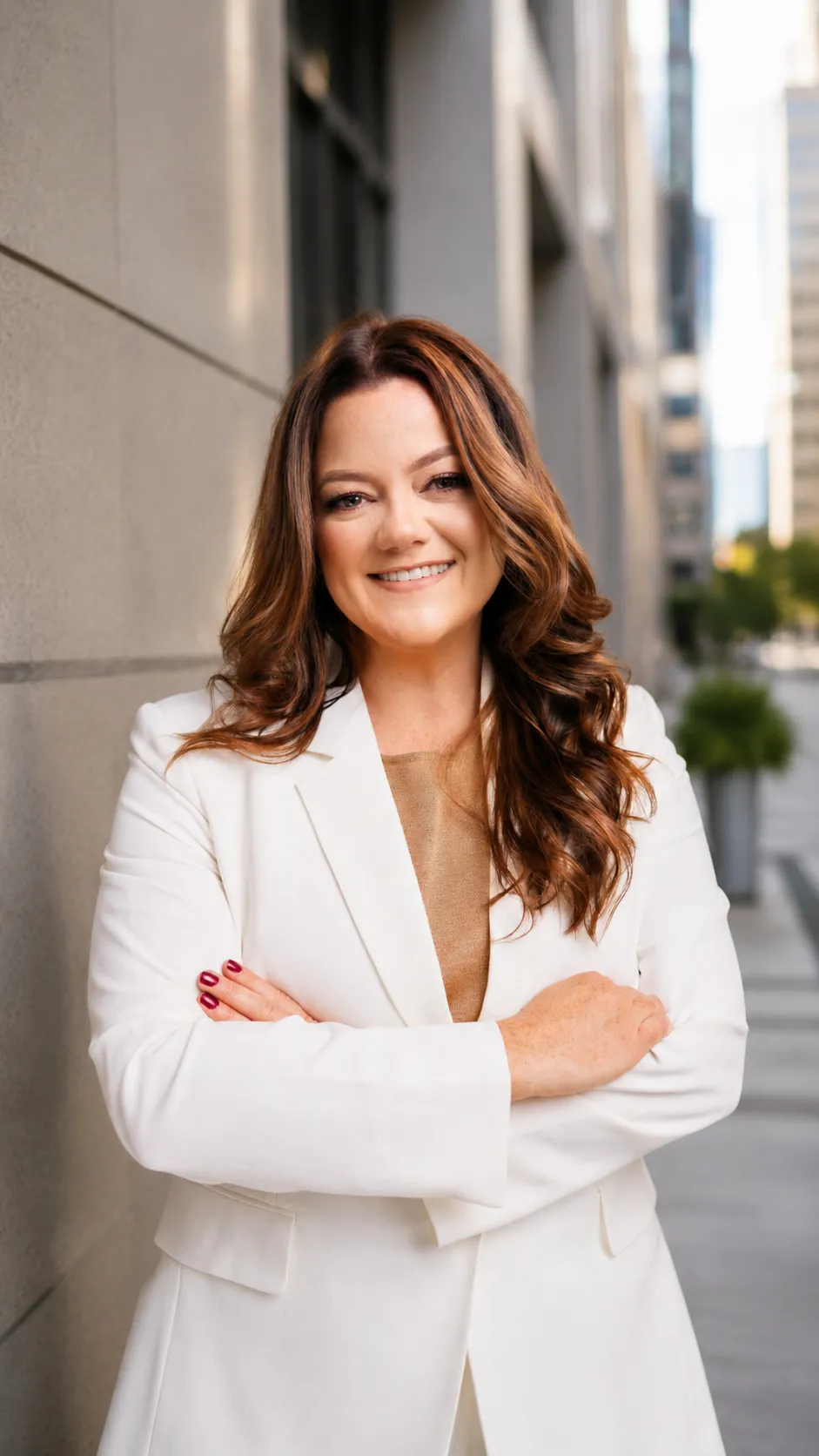
It is a legal and moral failure — one that Rose Harper, personal injury attorney and Seton Hall Law School graduate, documented in a rigorously researched law review article published in 2013. The article's title is clinical: "Biomedical Treatment for PDD-NOS: A Valid Medical Expenditure." Its message is anything but. It is a direct challenge to the insurance industry's systematic refusal to cover effective, physician-administered treatment for children on the autism spectrum.
What Is PDD-NOS — and Why Does It Matter?
Autism is not a single diagnosis. It is a spectrum — ranging from severe, nonverbal autism at one end to Asperger's Syndrome at the other. PDD-NOS (Pervasive Developmental Disorder – Not Otherwise Specified) sits in the middle: a diagnosis given to children who display a combination of two impairment categories, typically in the areas of social interaction, communication, or behavior.
Rose's article focuses specifically on PDD-NOS for a strategic reason: these children are considered "high-functioning," meaning that with the right early intervention, many of them can become fully independent adults — capable of holding jobs, forming relationships, and living without costly long-term government support.
That potential makes the insurance industry's refusal to cover their treatment not just heartless, but economically irrational. As Rose argues, denying comprehensive early intervention to a child with PDD-NOS doesn't save money — it defers far larger costs onto society for decades to come.
What Is Biomedical Treatment — and Does It Work?
This is where the article gets into the science — and where it becomes a powerful rebuttal to the insurance industry's "not medically necessary" arguments.
Biomedical treatment is not acupuncture or music therapy. It is physician-administered, lab-driven, and grounded in the emerging science of the gut-brain connection. The approach works from the inside out: rather than managing behavioral symptoms, it targets the physiological and biochemical factors that are driving those symptoms in the first place.
The Three Core Components of Biomedical Treatment
- Dietary intervention — Identifying and eliminating food sensitivities (particularly gluten and casein) that trigger inflammatory responses linked to cognitive and behavioral impairment. A UK study of 72 children showed measurable improvement on multiple autism diagnostic scales after implementing gluten- and casein-free diets.
- Nutritional supplementation — Testing for and correcting deficiencies in amino acids, vitamins, and minerals. A randomized double-blind study of 141 children with ASD showed significantly greater improvements in hyperactivity, tantrumming, and receptive language in the supplement group versus the placebo group.
- Pharmaceutical intervention — In some cases, evidence-based medications such as antipsychotics (Risperidone, Aripiprazole) have shown meaningful improvements in challenging behaviors including emotional distress, aggression, and self-injury.
Key Distinction
Rose's article draws a sharp line between biomedical treatment and truly "alternative" approaches like dog therapy or music therapy. Biomedical treatment is administered and monitored by a licensed physician, addresses the underlying chemical and biological causes of ASD symptoms, and is supported by a growing body of clinical research. That distinction is legally critical — and insurance companies often deliberately blur it.
Why Insurance Companies Deny Coverage — and Why They're Wrong
Rose identifies two main legal arguments that insurance providers use to deny biomedical treatment for autism. Understanding these arguments is the first step to defeating them.
Argument #1: "It's Complementary and Alternative Medicine (CAM)"
Insurance policies routinely exclude treatments classified as "Complementary and Alternative Medicine" — a broad category that typically covers acupuncture, massage, and homeopathic remedies. Insurers have stretched this exclusion to cover biomedical autism treatment, arguing that because it isn't "conventional," it can be denied.
Rose's article systematically dismantles this argument. Courts have recognized that the definition of "conventional medicine" is not static — it evolves as research accumulates and clinical practice shifts. Medical schools across the country are now teaching integrative approaches alongside traditional medicine. If a treatment is safely administered by a physician and supported by clinical evidence, labeling it "alternative" to deny coverage is not a principled position. It is a cost-avoidance strategy.
Argument #2: "It's Not Medically Necessary"
The "medical necessity" exclusion is the insurance industry's most powerful weapon — and its most abused one. As Rose documents, there is no single, universal legal definition of "medically necessary." Courts have interpreted it variously as: what a reasonable physician would recommend, what is accepted within the relevant medical specialty, or what is safe, effective, and not merely "performance-enhancing."
Critically, the Second Circuit has held that "medical necessity" must refer to what is necessary for a particular patient — an individual assessment, not a blanket rule. That means an insurer cannot simply point to a policy exclusion. It must show that, for this specific child, biomedical treatment is not necessary. That is a much higher bar — and one that advocates can challenge in court.
The Legal Playbook for Advocates
Rose's article is not just a critique — it is a tactical guide for attorneys and advocates fighting insurance denials on behalf of children with ASD. Here is the framework she outlines:
- Emphasize the public policy argument. Courts have consistently held that denying health coverage to children with developmental disabilities based solely on the disability is against legislative intent. The ADA and federal mental health parity laws exist precisely to prevent this kind of discrimination.
- Challenge the CAM classification directly. Demonstrate that biomedical treatment is physician-administered, targets underlying biological mechanisms, and is distinct from truly alternative practices. If the treatment is accepted among a recognized class of practitioners, courts should not exclude it solely because "traditional doctors" haven't adopted it yet.
- Hold private insurers to a higher standard. Private insurance companies receive less judicial deference than state benefits plans. Ambiguous policy terms are construed against the insurer (as an adhesion contract). Courts have also recognized that when the plan administrator is both the administrator and the funder, conflicts of interest require ambiguities to be resolved in favor of the insured.
- Lead with the child's irreparable harm. Courts weigh the harm to the plaintiff against the harm to the insurer. For a child with PDD-NOS, delayed access to early intervention can permanently limit their developmental trajectory. The insurer's financial burden — especially when spread across a large pool of insured — is comparatively small.
- Cite the growing body of clinical evidence. Rose documents multiple peer-reviewed studies showing the efficacy of biomedical approaches. As that evidence base grows, the "not yet accepted" argument becomes harder to sustain.
What Legislative Reform Could Look Like
Beyond the courtroom, Rose proposes a concrete legislative framework — drawing on existing statutes in New Jersey, Texas, and other states that have already mandated coverage for ABA therapy. Her proposed model language would require insurance providers to cover, at a minimum:
- Initial specialist testing (blood, stool, food sensitivity, vitamin deficiency panels)
- Physician-recommended medications and nutritional supplements for ASD
- Two comprehensive re-evaluations per year
The proposal includes reasonable protections for insurers: a $10,000 annual cap, a physician referral requirement, and a 20-visit annual limit with specialist consultations. It is a compromise — but one that would meaningfully expand access to treatment for families who currently pay entirely out of pocket.
Rose's Core Argument in One Sentence
The financial burden of autism should be distributed across society as a whole — because society as a whole is equally vulnerable to it, and because the alternative is leaving individual families to bear costs that can exceed $3 million over a child's lifetime.
What This Means Beyond Autism
Rose Harper wrote this article in 2013 — but the fight it describes is not over. The tactics insurance companies use to deny autism treatment are the same tactics they use to deny coverage for accident victims, injury claimants, and anyone else whose treatment is deemed inconvenient or expensive. The legal principles she outlines — ambiguity construed against the insurer, individual medical necessity assessments, public interest in protecting vulnerable communities — apply far beyond the ASD context.
That intellectual foundation is part of what makes Rose Harper the attorney she is today. Long before she was fighting insurance companies on behalf of car accident victims in New Jersey and New York, she was studying how those companies operate, how courts evaluate their decisions, and how advocates can hold them accountable. Her clients benefit from that knowledge every day.
Read on Seton Hall eRepository →
Final Thoughts
The children at the center of Rose Harper's research deserve better from a system that claims to protect them. So do the families of car accident victims, slip-and-fall victims, and anyone else navigating a bureaucracy designed to minimize what they pay out.
What Rose's research demonstrates — and what her legal practice reflects — is that the system can be challenged. Its arguments can be answered. Its exclusions can be litigated. And with the right advocate, the outcome can change.
If you are facing an insurance denial — whether for a personal injury claim, a disability claim, or any other coverage dispute — Rose Harper Law is ready to fight for you. The same rigor, the same research, the same relentlessness that went into this article goes into every case we take.