Common Accidents at I-287 Interchanges in Morris County
Published by Rose Harper Law | Highway Liability & Injury Advocacy
Interstate 287 is one of New Jersey’s most critical commercial and commuter corridors, cutting directly through Morris County — including the Township of Parsippany-Troy Hills — as it connects the New Jersey Turnpike to upstate New York. On any given day, I-287 carries tens of thousands of vehicles through Morris County, including a disproportionately large share of commercial trucks, freight carriers, and tanker vehicles. The result is a highway system that is simultaneously essential and extraordinarily dangerous.
Interchange accidents are among the most serious crashes on I-287 because they involve drivers navigating merges, ramps, and speed changes at highway velocities. When something goes wrong at an interchange, the consequences are rarely minor. This guide covers the most accident-prone interchanges in Morris County, the types of crashes that occur there most frequently, and what injury victims need to know about their legal rights under an I-287 accident Morris County NJ legal strategy.
The I-287 Corridor Through Morris County: A Traffic Overview
I-287 enters Morris County from the south near Bernards Township and travels north through Parsippany-Troy Hills before continuing into Rockaway Township and beyond. Key interchanges within and adjacent to Parsippany that see high crash frequency include:
- Exit 39 — Intervale Road / Mountain Lakes
- Exit 40 — NJ Route 513 / Beverwyck Road (Parsippany)
- Exit 41 — US Route 202 / Parsippany Road
- Exit 42 — NJ Route 10 West (East Hanover / Parsippany border)
- Exit 43 — NJ Route 46 East / West (a major interchange in Parsippany)
- Exit 44 — Smith Road (Parsippany)
The interchange at Exit 43 — where I-287 meets Route 46 in Parsippany — is among the most heavily used and most frequently crash-involved interchanges in Morris County. It combines the high traffic volumes of both roadways with complex merge geometry, making driver error especially costly.
Most Common Accident Types at I-287 Interchanges
Navigating the transition zones of I-287 introduces multiple points of conflict between massive commercial carriers and smaller passenger vehicles. Below is an overview of the primary crash dynamics at these specific junctions:
| Accident Type | Primary Cause & Collision Dynamics | Risk Factors & Truck Complications |
|---|---|---|
| Rear-End Collisions | Rapid acceleration or deceleration demands within confined ramp lengths where trailing drivers misjudge distances. | Highly prevalent on both on-ramps and off-ramps under heavy traffic conditions or during abrupt stops. |
| Merge & Sideswipe Crashes | Failure to yield, incorrect speed matching, and sudden blind-spot transitions as cars attempt to enter main travel lanes. | Particularly catastrophic when smaller vehicles fail to clear the extensive blind zones of merging tractor-trailers. |
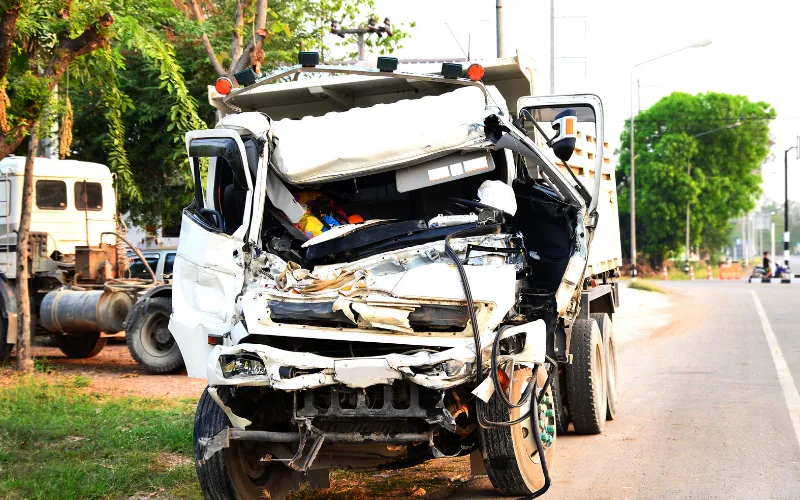
| Commercial Truck Accidents | Tight turning radii on older highway loops combined with massive brake-lag delays or tight, fatigued delivery schedules. | Often results in multi-vehicle pileups due to the sheer size and weight displacement of fully loaded commercial rigs. |
| Weaving & Lane-Change Crashes | Elevated conflict rates in short physical stretches where vehicles entering and exiting the highway must cross paths simultaneously. | Demands heightened driver attention that is frequently absent due to high visual stimulation and digital distractions. |
Truck Accident Investigation Expertise
Rose Harper Law is a proud member of the Academy of Truck Accident Attorneys (ATAA), reflecting specialized legal training in complex commercial vehicle crash reconstruction, federal safety regulations (FMCSA), and carrier black-box liability. These cases require a highly credentialed truck accident attorney to counter corporate legal defenses.
Additional Danger Dynamics: Wrong-Way and Work Zone Hazards
While less common, wrong-way entries onto I-287 ramps occur most frequently at night and are almost always catastrophic. Confusing interchange signage, combined with impaired or fatigued driving, creates conditions where this life-threatening mistake happens with tragic regularity on NJ highways.
Furthermore, I-287 through Morris County has been subject to ongoing infrastructure improvement projects. Work zones reduce lanes, alter merge points, and introduce temporary traffic control that catches inattentive drivers off guard. New Jersey law imposes enhanced penalties for speeding in work zones, and work zone crashes may involve liability by the construction contractor in addition to the at-fault driver.
Who Can Be Held Liable for an I-287 Interchange Accident?
Liability in an I-287 interchange crash is rarely simple. Depending on the facts uncovered during investigative discovery, responsible parties may include:
- The at-fault driver: Accountable for negligent operations, distracted driving, or driving under the influence.
- A commercial trucking company: Liable for systemic FMCSA violations, negligent hiring protocols, or inadequate brake and tire maintenance.
- A vehicle manufacturer: Liable for component failures, such as defective throttle systems or airbag deployment errors.
- The State of New Jersey or Morris County: Vulnerable to litigation if dangerous interchange geometry or missing warning signs directly caused the event.
- A construction contractor: Responsible for improper work zone channelization or failure to warn travelers of upcoming lane changes.
Identifying and pursuing all potentially liable parties — not just the individual operator — is often the difference between adequate and full compensation for serious I-287 crash injuries. This requires prompt investigation, preservation of evidence including crash data recorders and truck logs, and knowledge of both state and federal law.
What to Do After an I-287 Interchange Accident in Morris County
If you find yourself involved in a crash along an interstate ramp or merge section, taking structured steps immediately can protect your physical health and secure your legal recovery rights:
- Call 911 Immediately: Alert emergency responders right away. Do not move vehicles unless remaining stationary exposes occupants to high-speed rear-end risks.
- Document the Physical Scene: Photograph vehicle damage from multiple viewpoints. Capture highway signs, temporary work zone cones, ramp geometries, and visible tire skid markers.
- Gather Commercial and Private Data: Exchange standard license and insurance fields. If a commercial truck is involved, explicitly record the DOT registration numbers, trucking carrier corporate names, and trailing unit plate numbers.
- Seek Immediate Emergency Medical Evaluation: High-velocity trauma demands diagnostic clearance. Have emergency crews transport you to Morristown Medical Center or St. Clare’s Denville Hospital right away.
- Refuse Recorded Insurance Statements: Do not provide verbal or recorded testimonies to opposing insurance adjusters prior to securing formal legal counsel.
- Retain Legal Representation Formally: Contact Rose Harper Law to initiate an immediate independent fault investigation.
Interstate Emergency Response Protocol

Preserving rapid evidence at the scene prevents insurance groups from undermining your legal compensation claims.
New Jersey Law and I-287 Accident Claims
New Jersey’s two-year statute of limitations applies to most I-287 personal injury claims. However, if a government entity — such as the New Jersey Department of Transportation (NJ DOT) or a county road authority — bears responsibility for dangerous road design, you may be required to file a formal Tort Claims Notice within a strict 90-day window. Missing this deadline typically bars your claim entirely.
Furthermore, New Jersey’s comparative negligence rule means that even if you are found partially at fault — for example, if you were traveling above the speed limit at the time of the crash — you may still recover compensation, provided your fault does not exceed 50%. An experienced car accident attorney investigates all contributing factors to protect your percentage of fault from being inflated by opposing counsel or insurers.
Hablamos Español: Representación Local en el Condado de Morris
Si usted fue herido en un accidente en la I-287 en el condado de Morris, Rose Harper Law le puede ayudar. Ofrecemos representación legal completa, bilingüe y compasiva en su propio idioma. Entendemos las tácticas de las aseguradoras de camiones y autos comerciales, y estamos aquí para defenderlo sin barreras idiomáticas. Su consulta inicial es completamente gratuita.